
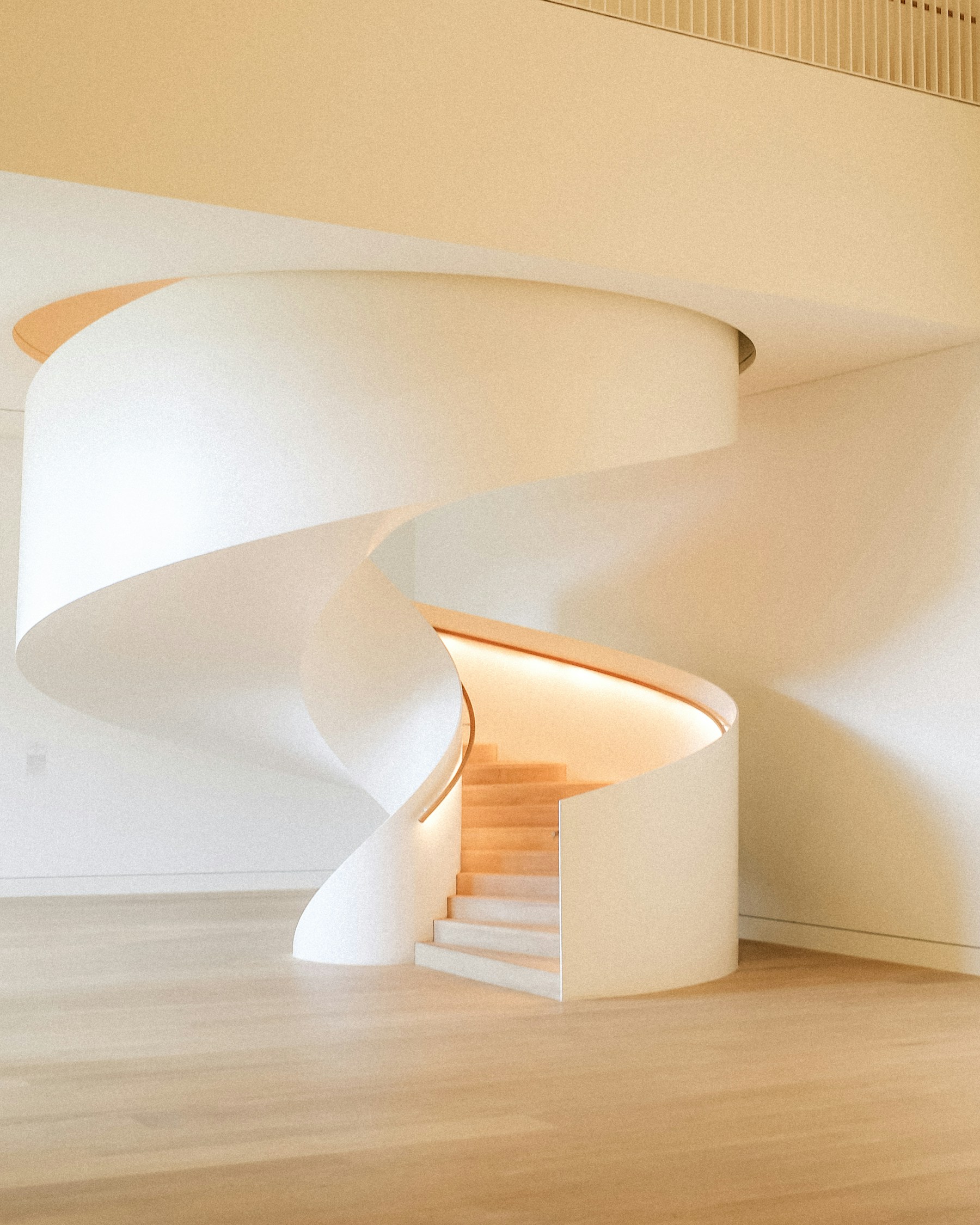
A modern staircase is not just a route between levels. It is a piece of architecture that shapes how a room feels, how light moves through a home and how materials meet each other.
Start With The Space, Not The Stair
Strong stair design begins with the building around it. The height between floors, available footprint, nearby walls, window positions and daily movement patterns all shape the final form.
A staircase that feels calm usually has a clear relationship to the room. It may frame an entry, sit along a wall, open toward a living space or become a sculptural centrepiece. The right choice depends on the architecture, not a catalogue style.
Proportion Does Most Of The Work
Modern stairs often look simple because the proportions are doing quiet work. Tread thickness, open space between steps, balustrade height, handrail size and the rhythm of supports all affect the result.
A heavy tread can feel grounded and permanent. A slim steel stringer can make a stair feel lighter. Glass can open sightlines, while timber adds warmth and grip underfoot.
- Open risers create lightness but need careful detailing.
- Solid stair forms can add privacy and storage opportunities.
- Curved and spiral forms need enough surrounding space to feel intentional.
Material Contrast Creates Character
The most successful modern stairs usually use a small material palette with deliberate contrast: timber with black steel, glass with stainless steel, or stone floors with warm treads.
Too many finishes can make a staircase feel busy. A restrained combination lets the joinery, balustrade and handrail details become the visual signature.
Details Decide Whether It Feels Premium
The difference between a basic stair and a refined stair often sits in the edges: how the tread meets the wall, how glass is fixed, how the handrail turns, and how the first and last steps land.
Good design also considers maintenance. Powder-coated steel, sealed timber, clean glass lines and accessible junctions help the stair hold its appearance over time.