
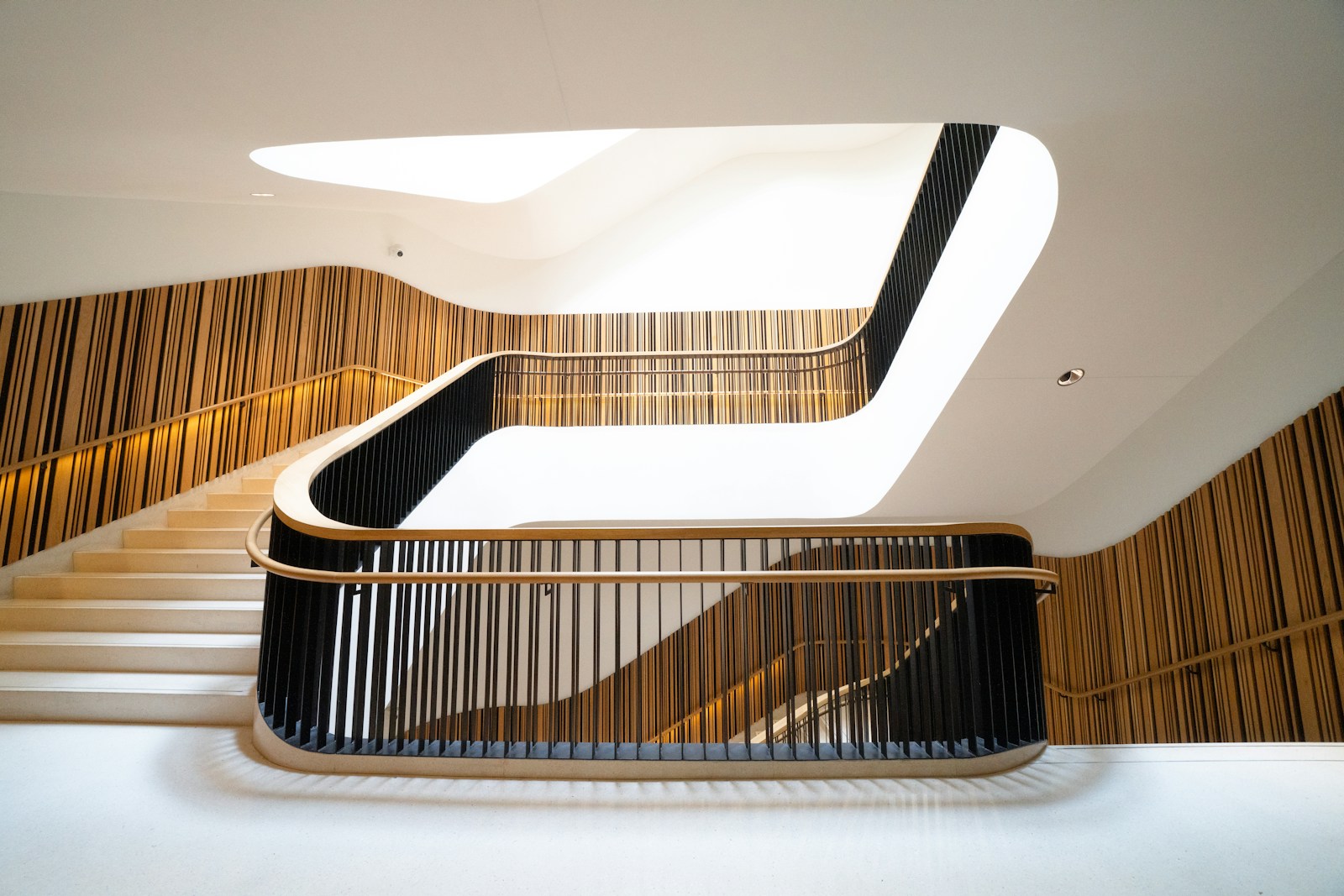
A modern staircase can look light, but it still has to behave like a structure. The engineering behind it controls safety, comfort, durability and how clean the final detailing can be.
Every Stair Has A Load Path
The load path is the route weight takes from the tread, through the stringer or support frame, into the floor or wall structure. In a simple stair this may be obvious. In a floating or open stair, it is often hidden inside steel, walls or fixings.
Before fabrication, the team needs to understand what the stair is fixed to, how loads transfer and whether surrounding structure can support the proposed design.
Comfort Comes From Geometry
A stair can be structurally strong and still feel awkward if the geometry is wrong. Rise, going, pitch, landing positions and head clearance all affect how natural the stair feels in daily use.
Modern design often pushes for slim lines and compact footprints, but the stair still needs a comfortable rhythm. That balance is part design and part engineering.
- Consistent riser heights reduce trip risk.
- Adequate tread depth supports comfortable foot placement.
- Handrail position affects both safety and the visual line of the stair.
Materials Need Different Structural Thinking
Steel is often used for strength, slim profiles and hidden support. Timber brings warmth but must be selected, sealed and fixed correctly. Glass balustrades need suitable thickness, fixing methods and edge protection.
The best result usually comes from combining materials according to what each one does well, rather than forcing one material to solve every problem.
Fabrication Tolerances Matter On Site
Modern stairs leave little room for rough adjustment. Glass lines, shadow gaps, steel plates and timber edges expose small errors quickly.
That is why site measurement, access checks and workshop preparation are critical. Accurate fabrication helps the installation feel controlled and reduces messy compromises on site.
Compliance Is Part Of The Design
Balustrade heights, openings, handrails, landings and stair comfort are not afterthoughts. They need to be considered early so the finished stair can look refined while still being safe for daily use.
Good engineering does not make the staircase look technical. It makes the finished design feel quiet, stable and permanent.